
APItopic
Model explainer7 min read/Updated 2026-05-25

Qwen3.5-Omni: all-modal audio, video and vibe coding

Qwen3.5-Omni is presented as an all-modal model for text, image, audio, video, speech and real-time interaction. It highlights 215 reported SOTA tasks, 113-language speech recognition, 36-language speech generation, long audio/video understanding and audio-video vibe coding. This page reads it as a workflow-expansion release: voice, camera and video become direct inputs for code, content operations and enterprise assistants.
Key takeaways

  1. 01Qwen3.5-Omni is presented as an all-modal release that expands model input from text and images into long audio, video and real-time speech.
  2. 02Its most useful practical examples are multilingual speech, long media understanding, tool-assisted real-time answers and camera-plus-voice vibe coding.
  3. 03Keep the 215-task SOTA and competitor comparisons as reported until current benchmark pages are checked.
Qwen3.5-Omni: all-modal audio, video and vibe coding video guide. A short SmarToken video for Qwen3.5-Omni: All-Modal Audio, Video And Vibe Coding, focused on model knowledge, evaluation angles and practical takeaways.

Qwen3.5-Omni is positioned as an all-modal interface

Qwen3.5-Omni can understand and generate across text, image, audio, video and speech, with stronger real-time interaction.

That changes the product surface. A model that can listen, watch, speak, read and write can become the front end for content production, support, education, accessibility, video operations and developer prototyping. The key is whether those modes work together under latency and reliability constraints.

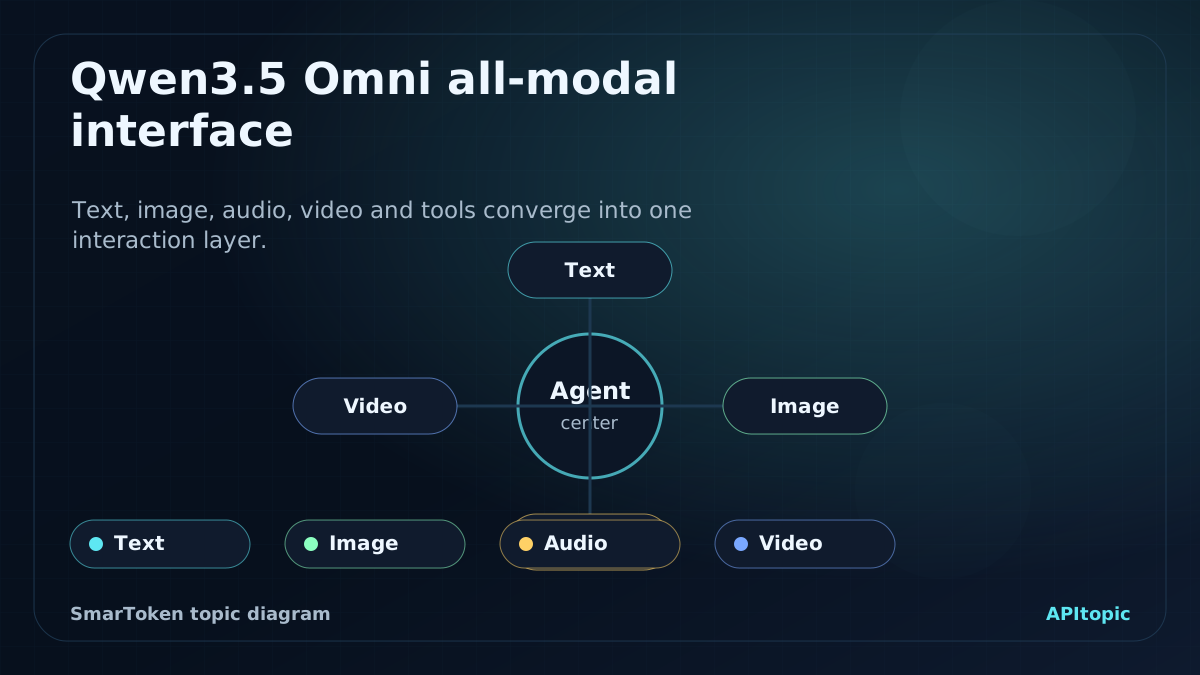
SmarToken editorial diagram for Qwen3.5 Omni all-modal interface: Text, Image, Audio, Video.
All-modal diagram for reading Qwen3.5 Omni as an interface model with speech, vision and tool lanes.
  • Test mixed input, not single-modality prompts only.
  • Measure latency for real-time interaction.
  • Check whether outputs include usable structure.
CapabilityExampleValidation step
Speech113-language recognition and 36-language generation.Test accents, dialects and noise.
VideoLong media breakdown and timestamps.Compare against manual timecodes.
CodingCamera and voice prompt to app prototype.Run the generated project.
ToolsReal-time questions can call tools.Check source freshness and function calls.

Speech support is the broadest adoption path

language and dialect coverage, more natural voice generation and better real-time conversational behavior.

Speech is where all-modal models become broadly useful. Workers can dictate requirements, users can ask questions hands-free and support flows can handle audio directly. The hard parts are accent coverage, noisy environments, interruption handling, response timing and emotional tone control. For practical use, test the languages and settings a team actually uses.

  • Use real noisy recordings.
  • Measure word error rate and response delay.
  • Check whether interruptions are handled naturally.

Audio-video vibe coding needs engineering review

users can show a sketch or product idea through camera and voice, then have Qwen3.5-Omni generate app, web or game code.

This is a strong demo category. It should be evaluated like any generated software. Run the app. Inspect dependencies. Check responsiveness and accessibility. Ask whether the generated UI follows the spoken requirements or merely imitates a plausible product.

  • Record the input video or sketch.
  • Run generated code locally.
  • Compare the app with spoken requirements.

Long audio and video inputs create content-ops value

the model can process very long audio, break down video scenes, infer relationships and produce timestamps and chapters.

That is immediately useful for media teams, education platforms and compliance review. The risk is silent error. A wrong timestamp or missed scene can damage a workflow. Use known-answer videos and require timestamped evidence before trusting the model in production.

  • Use videos with known chapters.
  • Ask for timestamps and uncertainty notes.
  • Review summaries before downstream automation.

API access needs to be treated as three routes

ordinary users can try Qwen Chat while developers and enterprises can call Plus, Flash and Light variants through Bailian.

Those routes may behave differently. A chat product is not the same as a real-time API or offline media API. For practical use, test the exact endpoint, mode, quota and latency profile the application will use.

  • Separate chat, real-time and offline API tests.
  • Refresh endpoint names and quotas.
  • Measure cost per completed media workflow.

Common mistakes to avoid

Mistake

Treating one article as a final ranking

Why it hurts

Model releases, pricing, quotas and benchmark positions can change quickly.

Better move

Use the analysis as a shortlist, then run current checks against your own workload.

Mistake

Choosing by brand instead of task

Why it hurts

A strong chat model may still be weak for long documents, coding agents, multimodal work or low-latency routes.

Better move

Define the job first, then compare models with prompts, files or media that match that job.

Mistake

Copying claims without a current verification check

Why it hurts

Benchmark numbers, context windows, API names and prices may be dated or provider-specific.

Better move

Confirm high-impact details against official docs, model cards or live provider pages.

Read it as a model briefing, not a setup guide

View model catalog ->

Use this page to understand the model family, the evaluation angle and the current conversation around it. Then choose one or two realistic prompts, documents or media tasks and test whether the model behaves well in your own workflow.

FAQ

These questions reflect recurring reader concerns around Chinese model knowledge, evaluation and fast-moving model releases.

What is the main point of Qwen3.5-Omni: all-modal audio, video and vibe coding?

Qwen3.5-Omni is presented as an all-modal model for text, image, audio, video, speech and real-time interaction. It highlights 215 reported SOTA tasks, 113-language speech recognition, 36-language speech generation, long audio/video understanding and audio-video vibe coding. This page reads it as a workflow-expansion release: voice, camera and video become direct inputs for code, content operations and enterprise assistants.

How should readers use the Chinese model context here?

Use it as market and product context, then verify technical claims, pricing, quotas and release details against official pages or your own tests before making a decision.

Why is there a short video with the page?

The video gives a fast visual summary of the model story, while the written page carries the caveats, comparisons and practical checks.

References and verification

SmarToken tracks public model releases, technical reports, product announcements and market signals to keep this catalog useful.

Technical claims need to be treated as dated unless they are confirmed by current official model cards, technical reports or provider announcements.

Pricing, quota, availability and benchmark details can change after the review date, so production decisions should use current vendor pages and direct workload tests.

Get API Key