
APItopic
Model explainer7 min read/Updated 2026-05-25

Kimi K2.6 architecture: native multimodal agent and open deployment

This page reads Kimi K2.6 from the architecture and open-deployment side. It highlights a trillion-parameter MoE design with 32B active parameters per pass, 256K context, MoonViT visual encoding, native multimodal fusion, INT4 quantization, thinking and instant modes, API compatibility and deployment through vLLM or SGLang. This page separates this page from the Kimi release page by focusing on how K2.6 is built and deployed.
Key takeaways

  1. 01This Kimi K2.6 source is architecture-heavy: MoE routing, active parameters, long context, MoonViT, native multimodal fusion and deployment.
  2. 02It complements the earlier Kimi release page by focusing on how K2.6 is built and served.
  3. 03Keep benchmark and performance claims release-focused while turning architecture terms into practical validation steps.
Kimi K2.6 architecture: native multimodal agent and open deployment video guide. A short SmarToken video for Kimi K2.6 Architecture: Native Multimodal Agent And Open Deployment, focused on model knowledge, evaluation angles and practical takeaways.

This page is about the K2.6 stack

Unlike the Kimi release page that emphasizes product workflows, K2.6 as an architecture and deployment stack: MoE routing, long context, MoonViT, INT4, reasoning modes and open serving.

That makes it useful for developers. A model release can sound impressive without explaining whether it is practical to serve, migrate to or inspect. This useful pieces are the design choices: trillion-scale MoE, 32B active parameters per pass, 256K context, native visual encoding, INT4 quantization and API compatibility.

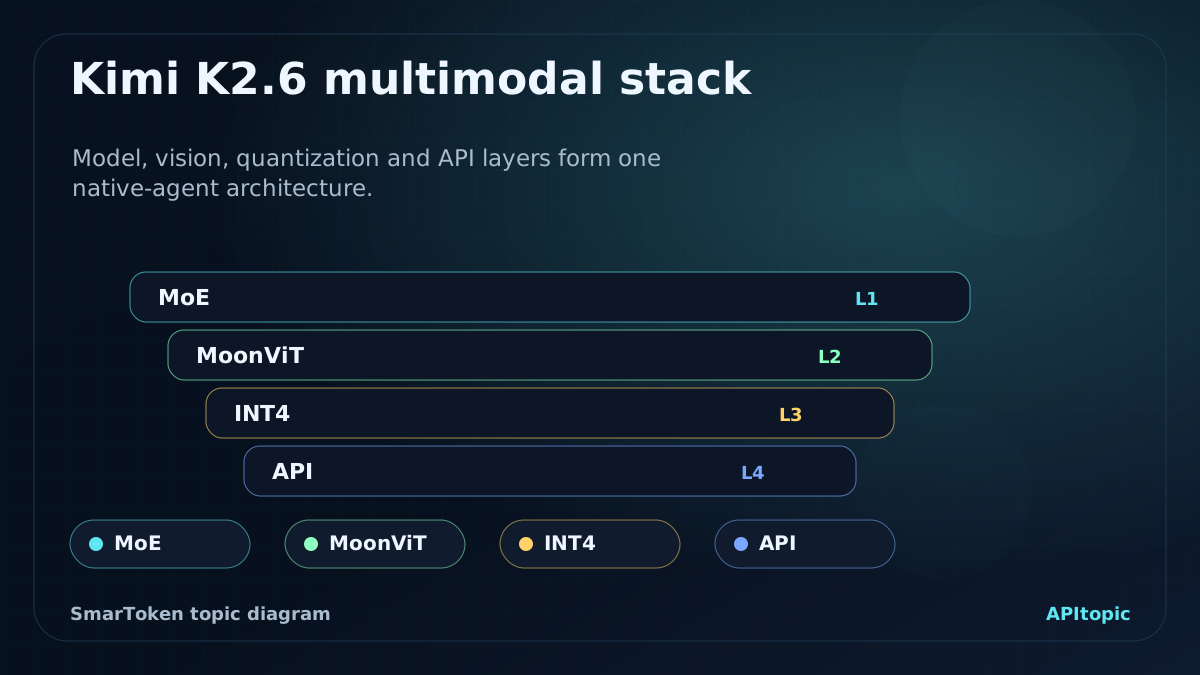
SmarToken editorial diagram for Kimi K2.6 multimodal stack: MoE, MoonViT, INT4, API.
Architecture stack diagram for Kimi K2.6, separating model core, vision layer, quantization and serving route.
  • Read this page as an architecture companion to the Kimi release page.
  • Separate model-design claims from workflow performance claims.
  • Turn every architecture feature into a hands-on test.
Architecture piecePlain meaningValidation step
MoE routingMany experts exist, only a subset activates per token.Measure latency, quality and routing stability.
MoonViTA visual encoder for native multimodal input.Test charts, screenshots and video frames.
INT4Quantization planned into the model path.Compare memory, throughput and quality loss.
API compatibilityFits OpenAI or Anthropic-style clients.Run migration tests with existing app calls.

Long context is useful only if retrieval stays grounded

A 256K context window, but readers should test whether the model actually retrieves, cites and uses details correctly across that window.

Large context windows can hide quality problems. A model may accept many tokens and still miss the important clause. Developers should test long documents, code repositories and multimodal references with known answer locations. The goal is not max context size; it is reliable use of the context.

  • Use needle-in-document tests.
  • Ask for evidence locations and supporting evidence.
  • Compare long-context behavior with shorter routed retrieval.

Native multimodality needs cross-modal tests

K2.6 uses MoonViT and native multimodal fusion. That should be tested with mixed image, video and text tasks, not only visual Q&A.

Native multimodal capability matters when the model must connect a diagram, a screenshot, a document and an instruction. Simple captioning is not enough. Good tests should include UI screenshots, charts with hidden labels, video snippets and code or document follow-up tasks.

  • Test screenshots and charts alongside text instructions.
  • Use follow-up questions that require visual memory.
  • Check whether tool use improves visual reasoning or distracts it.

Reasoning modes change application behavior

Thinking and Instant modes, plus preserve_thinking for multi-turn reasoning continuity.

For developers, this is an application-design choice. Thinking mode may improve difficult tasks but cost more time and tokens. Instant mode is better for fast answers. Preserving reasoning may help long tasks keep continuity, but it may also increase context cost or expose reasoning traces that need governance. For practical use, run route-level testing.

  • Use Thinking mode for hard reasoning and code.
  • Use Instant mode for simple UX flows.
  • Define when reasoning traces are stored, shown or discarded.

Open deployment turns claims into tests

K2.6 can be used through official APIs or deployed through serving engines such as vLLM and SGLang. That makes independent validation more realistic.

Open deployment is valuable because teams can measure quality, cost and latency in their own environment. But it also creates responsibility: correct quantization, serving configuration, safety controls and compatibility checks. The practical advice is to start with a migration harness and a small benchmark pack before moving production workloads.

  • Run OpenAI or Anthropic-compatible client calls.
  • Compare official API and self-hosted serving output.
  • Use vendor verification and route tests before production.

Common mistakes to avoid

Mistake

Treating one article as a final ranking

Why it hurts

Model releases, pricing, quotas and benchmark positions can change quickly.

Better move

Use the analysis as a shortlist, then run current checks against your own workload.

Mistake

Choosing by brand instead of task

Why it hurts

A strong chat model may still be weak for long documents, coding agents, multimodal work or low-latency routes.

Better move

Define the job first, then compare models with prompts, files or media that match that job.

Mistake

Copying claims without a current verification check

Why it hurts

Benchmark numbers, context windows, API names and prices may be dated or provider-specific.

Better move

Confirm high-impact details against official docs, model cards or live provider pages.

Read it as a model briefing, not a setup guide

View model catalog ->

Use this page to understand the model family, the evaluation angle and the current conversation around it. Then choose one or two realistic prompts, documents or media tasks and test whether the model behaves well in your own workflow.

FAQ

These questions reflect recurring reader concerns around Chinese model knowledge, evaluation and fast-moving model releases.

What is the main point of Kimi K2.6 architecture: native multimodal agent and open deployment?

This page reads Kimi K2.6 from the architecture and open-deployment side. It highlights a trillion-parameter MoE design with 32B active parameters per pass, 256K context, MoonViT visual encoding, native multimodal fusion, INT4 quantization, thinking and instant modes, API compatibility and deployment through vLLM or SGLang. This page separates this page from the Kimi release page by focusing on how K2.6 is built and deployed.

How should readers use the Chinese model context here?

Use it as market and product context, then verify technical claims, pricing, quotas and release details against official pages or your own tests before making a decision.

Why is there a short video with the page?

The video gives a fast visual summary of the model story, while the written page carries the caveats, comparisons and practical checks.

References and verification

SmarToken tracks public model releases, technical reports, product announcements and market signals to keep this catalog useful.

Technical claims need to be treated as dated unless they are confirmed by current official model cards, technical reports or provider announcements.

Pricing, quota, availability and benchmark details can change after the review date, so production decisions should use current vendor pages and direct workload tests.

Get API Key