Kimi K2.6: open-source code model and agent swarm upgrade
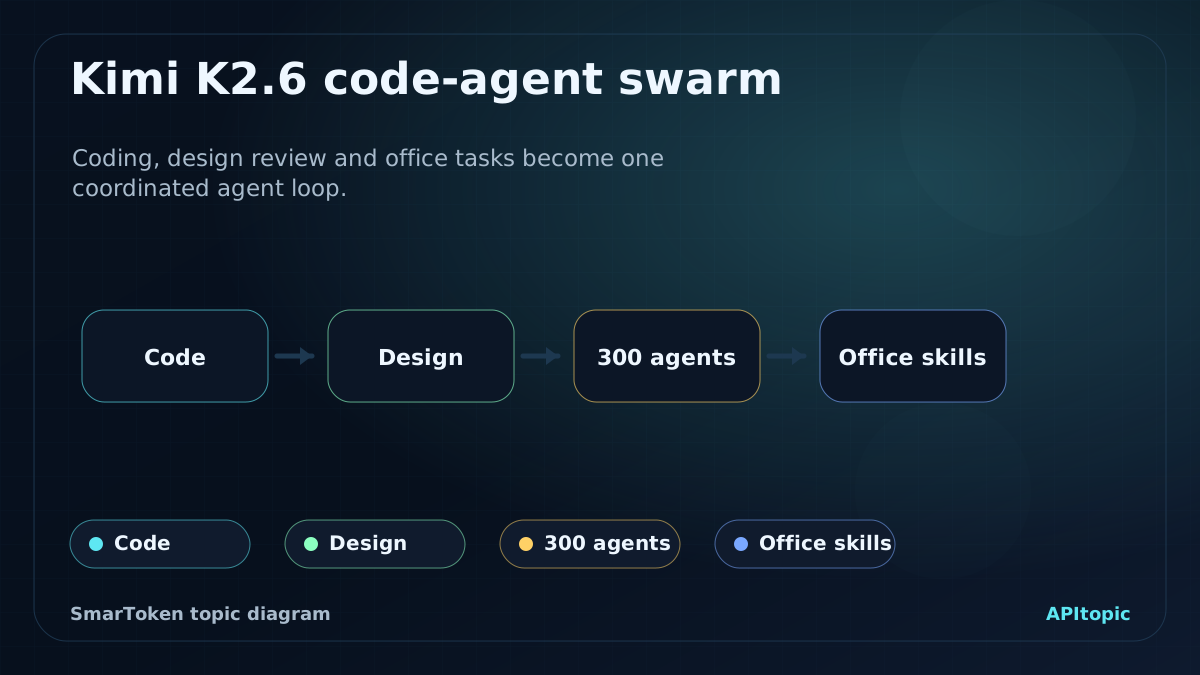
Kimi K2.6 is positioned as Moonshot AI's strongest code and agent model so far. Its main claims are long-horizon coding, stronger web and design generation, a larger agent-swarm architecture, better autonomous operation with OpenClaw and Hermes-style frameworks, and new office-skill workflows. This page reads the release as a workflow story: code first, agent orchestration second, office productivity third.
Key takeaways
01This page frames Kimi K2.6 as a release for long-horizon coding and agent orchestration, not only a general chat upgrade.
02Its strongest editorial themes are 13-hour coding runs, code-driven design, 300-agent swarm coordination, autonomous operation and office skills.
03The page preserves the reported claims while telling readers to validate benchmark and demo results on their own repositories and workflows.
Kimi K2.6: open-source code model and agent swarm upgrade video guide. A short SmarToken video for Kimi K2.6: Open-Source Code Model And Agent Swarm Upgrade, focused on model knowledge, evaluation angles and practical takeaways.
Kimi K2.6 is a code-and-agent release
Kimi K2.6 is positioned as Moonshot AI's strongest code model so far, with a broader claim: the model is meant to run long software tasks, coordinate agents and produce multi-format work, not just answer prompts.
The opening quote, "Talk is cheap. Show me the code," sets the tone. Kimi says K2.6 improves code, long-horizon execution, visual web creation and agent swarms. The model is available through Kimi, Kimi App, Kimi API and Kimi Code, and the open-weight path is presented as part of the launch. The job is to turn that release language into an evaluation frame: can the model keep context, make useful edits, coordinate tools and leave outputs that humans can inspect?
Workflow diagram for how Kimi K2.6 combines code, design and multi-agent execution in one product surface.
Read K2.6 as a workflow release, not only a chat-model update.
Separate release claims from independent proof.
Test the model on real codebases, not only toy prompts.
Release theme
Reported claim
Practical test
Long coding
Continuous multi-hour coding and thousands of code changes.
Run a repository repair or performance task with logging.
Agent swarm
Large numbers of sub-agents and coordinated steps.
Ask for a multi-artifact research or office workflow.
Design coding
Professional web apps and visual assets.
Inspect layout, interaction, code quality and asset consistency.
The long-horizon coding examples matter because they are workflow-shaped
The strongest examples are not short algorithm answers. They are long tasks: deployment, optimization, refactoring and performance analysis across many tool calls.
That changes how readers should evaluate K2.6. A model that can write a correct function may still fail when asked to read a large repo, diagnose a bottleneck, choose an optimization path and preserve existing behavior. cases involving model inference optimization and refactoring an old matching engine. Do not repeat the numbers as universal guarantees; it should turn them into a test checklist for engineering teams.
Include multi-hour or multi-step tasks in the test pack.
Record every tool call and code change.
Compare final throughput, correctness and maintainability, not only the model's explanation.
Code-driven design is a different skill from code completion
Kimi's page argues that K2.6 can turn visual and product prompts into polished web applications, with generated assets, hero sections, interactions and scroll-triggered effects.
This is useful, but it needs careful review. Design coding requires more than generating HTML. A good result needs information hierarchy, spacing, responsive layout, consistent imagery, form behavior and accessible interactions. landing-page and multimodal-to-code examples. For readers, the takeaway is to score finished experiences, not screenshots.
Check responsive behavior and text fit.
Run the app and inspect this page code.
Use real brand or product constraints instead of generic prompts.
Agent swarms make the release broader than programming
K2.6 upgrades Kimi's agent-swarm architecture, supporting more sub-agents and more coordinated steps for research, documents, webpages, slides and spreadsheets.
That claim is the bridge from code model to productivity system. The page describes research and finance-style workflows where agents split tasks, produce intermediate artifacts and deliver multiple outputs. This is where quality control becomes critical. More agents can increase coverage, but they can also spread errors faster. For practical use, keep visible plans, checkpoints and artifact review.
Ask the swarm to expose its task breakdown.
Review intermediate tables, citations and assumptions.
Require final artifacts to be editable and reproducible.
The office-skill story points to reusable workflows
Kimi's page ends with office skills and Claw groups: reusable skills, document-to-skill conversion and human-agent collaboration spaces.
This may be the most practical part for non-developers. Instead of asking a model to redo a task from scratch, Kimi wants users to package workflows as reusable skills. That makes the release relevant to research reports, one-page company briefs, spreadsheets, presentations and recurring document formats. The The recommendation is simple: evaluate K2.6 by whether it can make a reusable workflow more reliable, not by whether one demo looks impressive.
Turn repeated document formats into skills.
Keep human review at the approval step.
Use agent groups only when task ownership is explicit.
Common mistakes to avoid
Mistake
Treating one article as a final ranking
Why it hurts
Model releases, pricing, quotas and benchmark positions can change quickly.
Better move
Use the analysis as a shortlist, then run current checks against your own workload.
Mistake
Choosing by brand instead of task
Why it hurts
A strong chat model may still be weak for long documents, coding agents, multimodal work or low-latency routes.
Better move
Define the job first, then compare models with prompts, files or media that match that job.
Mistake
Copying claims without a current verification check
Why it hurts
Benchmark numbers, context windows, API names and prices may be dated or provider-specific.
Better move
Confirm high-impact details against official docs, model cards or live provider pages.
Turn the article into a short test plan: pick realistic prompts, compare outputs against one or two alternative model families and record quality, latency and cost before choosing a route.
FAQ
These questions reflect recurring reader concerns around Chinese model knowledge, evaluation and fast-moving model releases.
What is the main point of Kimi K2.6: open-source code model and agent swarm upgrade?
Kimi K2.6 is positioned as Moonshot AI's strongest code and agent model so far. Its main claims are long-horizon coding, stronger web and design generation, a larger agent-swarm architecture, better autonomous operation with OpenClaw and Hermes-style frameworks, and new office-skill workflows. This page reads the release as a workflow story: code first, agent orchestration second, office productivity third.
How should readers use the Chinese model context here?
Use it as market and product context, then verify technical claims, pricing, quotas and release details against official pages or your own tests before making a decision.
Why is there a short video with the page?
The video gives a fast visual summary of the model story, while the written page carries the caveats, comparisons and practical checks.
References and verification
SmarToken tracks public model releases, technical reports, product announcements and market signals to keep this catalog useful.
Technical claims need to be treated as dated unless they are confirmed by current official model cards, technical reports or provider announcements.
Pricing, quota, availability and benchmark details can change after the review date, so production decisions should use current vendor pages and direct workload tests.