
APItopic
Technical tutorial7 min read/Updated 2026-05-25

Tencent Yuanqi: a zero-code asset inventory agent workflow

A practical no-code agent workflow: a user uploads an asset barcode image, Tencent Yuanqi extracts the image URL, an image-understanding plugin reads the barcode, Hunyuan Turbo extracts the asset number, and a knowledge base returns asset information. It is treated as a field-operations example: agent builders become useful when they connect model perception, structured extraction, internal data and a familiar mobile entry point.
Key takeaways

  1. 01A useful hands-on example of building a field-operations mini program with no-code agent tooling.
  2. 02Its workflow combines image URL extraction, image understanding, Hunyuan Turbo extraction, knowledge-base lookup and WeChat-style publishing.
  3. 03Keep the comparison's caveats: recognition is slower than barcode scanners, trial-mode image upload has friction, and production knowledge bases need care.
Tencent Yuanqi: a zero-code asset inventory agent workflow video guide. A short SmarToken video for Tencent Yuanqi: A Zero-Code Asset Inventory Agent Workflow, focused on technical background and implementation context.

A complete no-code AI workflow

The workflow builds an asset inventory mini program in Tencent Yuanqi that reads a barcode image, extracts the asset code and looks it up through a knowledge base.

That makes the workflow valuable. It is not just a chatbot demo. It connects a mobile entrance, image understanding, model-based extraction and internal data lookup. The result is a small field tool that can be opened from WeChat-style channels and used on a phone.

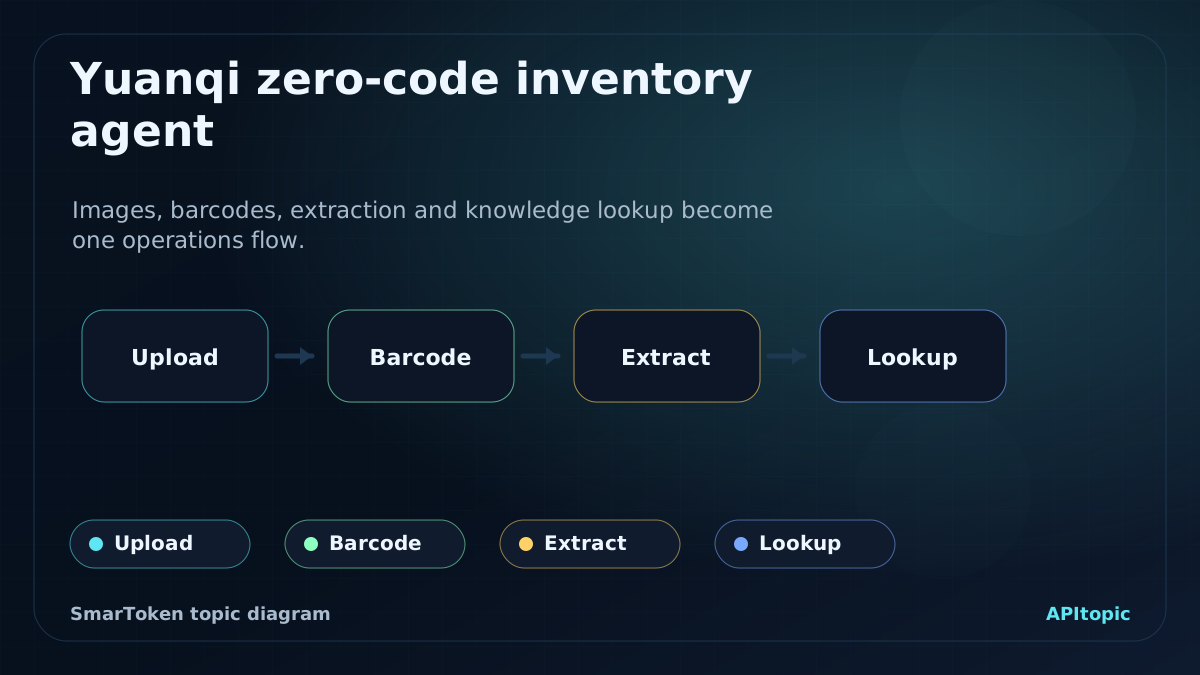
SmarToken editorial diagram for Yuanqi zero-code inventory agent: Upload, Barcode, Extract, Lookup.
Operations-flow diagram for Tencent Yuanqi asset inventory agents, from uploaded images to structured lookup.
  • Capture the uploaded image URL.
  • Use image understanding to read the barcode.
  • Extract the numeric asset code.
  • Query a knowledge base for asset information.
NodeRoleProduction check
Parameter extractionPull fileUrls from the uploaded image.Validate upload behavior on real devices.
Image understandingRead barcode information from the photo.Compare with scanner ground truth.
Hunyuan TurboExtract clean numeric output.Constrain output format.
Knowledge baseMap asset code to asset details.Refresh and protect internal data.

The workflow is slower but more flexible than a scanner

The comparison notes model recognition takes seconds to more than ten seconds, so the experience is slower than direct camera barcode scanning.

That tradeoff matters. A scanner is faster for one narrow job. An AI workflow is more flexible when photos are messy, when extra context matters or when the next step involves language output. Use this pattern where flexibility matters more than raw scan speed.

  • Use dedicated scanners for high-volume pure barcode work.
  • Use AI workflows when images are messy or multi-step.
  • Measure wait time on real phones.

The parameter node is a practical source of friction

trial runs could not directly upload images, so the comparison had to paste a known image URL in the expected format.

This kind of detail is useful for builders. No-code tools often look simple until input formats, test-mode limits or plugin parameters appear. Keep the warning: test with real upload paths, not only with pasted sample URLs.

  • Document expected parameter names.
  • Test preview mode and published mode separately.
  • Keep a known test image URL for debugging.

The knowledge base is the business logic

This page omits commercial details, but says the knowledge base maps asset codes to corresponding asset information.

That is the important architecture point. The model does not need to know the asset catalog. It needs to extract the identifier reliably, then query a controlled knowledge source. This keeps business data easier to update and review.

  • Keep asset data outside the prompt.
  • Refresh the knowledge base on a schedule.
  • Return structured fields for downstream use.

Deployment channels make the agent operational

the final agent can be connected to the workflow and used through mini program, web and other entrances.

Distribution is part of the product. A field tool that lives where workers already are is more likely to be used. Tencent's ecosystem connection is why this example matters: it turns an agent workflow into a reachable mobile utility. The remaining requirements are access control, audit logs and data privacy.

  • Publish to the channel users already open.
  • Restrict internal asset data access.
  • Log recognition failures and manual corrections.

Common mistakes to avoid

Mistake

Treating one article as a final ranking

Why it hurts

Model releases, pricing, quotas and benchmark positions can change quickly.

Better move

Use the analysis as a shortlist, then run current checks against your own workload.

Mistake

Choosing by brand instead of task

Why it hurts

A strong chat model may still be weak for long documents, coding agents, multimodal work or low-latency routes.

Better move

Define the job first, then compare models with prompts, files or media that match that job.

Mistake

Copying claims without a current verification check

Why it hurts

Benchmark numbers, context windows, API names and prices may be dated or provider-specific.

Better move

Confirm high-impact details against official docs, model cards or live provider pages.

Read it as a model briefing, not a setup guide

View model catalog ->

Use this page to understand the model family, the evaluation angle and the current conversation around it. Then choose one or two realistic prompts, documents or media tasks and test whether the model behaves well in your own workflow.

FAQ

These questions reflect recurring reader concerns around Chinese model knowledge, evaluation and fast-moving model releases.

What is the main point of Tencent Yuanqi: a zero-code asset inventory agent workflow?

A practical no-code agent workflow: a user uploads an asset barcode image, Tencent Yuanqi extracts the image URL, an image-understanding plugin reads the barcode, Hunyuan Turbo extracts the asset number, and a knowledge base returns asset information. It is treated as a field-operations example: agent builders become useful when they connect model perception, structured extraction, internal data and a familiar mobile entry point.

How should readers use the Chinese model context here?

Use it as market and product context, then verify technical claims, pricing, quotas and release details against official pages or your own tests before making a decision.

Why is there a short video with the page?

The video gives a fast visual summary of the model story, while the written page carries the caveats, comparisons and practical checks.

References and verification

SmarToken tracks public model releases, technical reports, product announcements and market signals to keep this catalog useful.

Technical claims need to be treated as dated unless they are confirmed by current official model cards, technical reports or provider announcements.

Pricing, quota, availability and benchmark details can change after the review date, so production decisions should use current vendor pages and direct workload tests.

Get API Key